


The Baltic Dry Index (BDI) is already benefiting from a supportive backdrop. Iron ore demand remains firm, Guinea’s bauxite exports continue to grow, Atlantic basin activity is strong, and seasonal grain flows are providing additional support.
Yet there may be another catalyst waiting in the wings: a Super El Niño.
While typically viewed through an agricultural or energy lens, severe El Niño events have historically had meaningful implications for shipping. For dry bulk markets in particular, they can create the ideal combination of stronger cargo demand, longer trade routes and reduced fleet efficiency.
In Peninsula’s latest dry bulk analysis, El Niño has already been identified as a potential support factor through three key channels: longer grain trade routes, increased coal demand as hydroelectric generation weakens, and potential disruption at the Panama Canal.
The common denominator is not necessarily higher commodity volumes. It is higher tonne-mile demand.
As Peninsula has consistently seen across freight markets, what matters is not simply how much cargo moves, but how efficiently the global fleet can move it. Even modest disruptions can have an outsized impact when vessel supply is already constrained by environmental regulations, slower operating speeds and limited fleet growth.
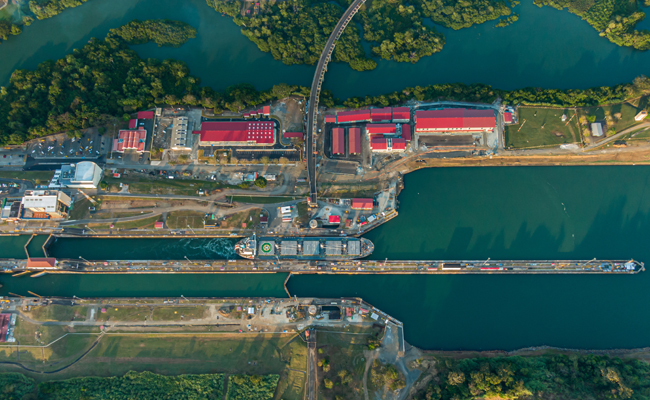
The Panama Canal is perhaps the clearest example. Previous El Niño events contributed to drought conditions that restricted canal capacity, forcing vessels onto significantly longer routes. Should similar conditions emerge again, grain, coal and minor bulk cargoes moving from the Atlantic basin into Asia could face materially longer voyages, tying up vessel capacity and tightening effective supply.
At the same time, reduced rainfall across parts of Asia could weaken hydroelectric generation and increase reliance on thermal coal. Additional imports into India, China and Southeast Asia would support trade flows from key exporters such as Indonesia, Australia and South Africa.
Agricultural markets could reinforce the trend. El Niño has historically disrupted Australian grain production while increasing reliance on South American and US exports. The cargo still moves, but it travels further. From a shipping perspective, that distinction matters.
Perhaps most importantly, El Niño has the potential to introduce inefficiencies across commodity supply chains. Inland logistics, export infrastructure and transportation networks can all come under pressure. The result is lower fleet productivity, longer waiting times and greater congestion. In shipping markets, these inefficiencies often have the same effect as removing vessels from the water.
Who benefits most?
- Panamax and Kamsarmax vessels appear best positioned. Grain rerouting, higher coal imports and Panama Canal disruption sit squarely within their core trade mix.
- Supramax and Ultramax vessels could also benefit as weather-related disruptions increase tonne-mile demand across agricultural products, fertilisers, bauxite and other minor bulks.
- Capesize vessels should participate through stronger coal demand and commodity trade flows, although they are less directly exposed to Panama Canal dynamics.
Why it matters now?
The key point is that today’s market strength is not primarily an El Niño story.
Current support continues to come from the structural fundamentals highlighted in Peninsula’s market outlook: strong iron ore demand, rising bauxite exports, robust Atlantic basin activity and healthy grain flows.
A Super El Niño would therefore represent an additional layer of support rather than the foundation of the rally itself. If forecasts prove accurate and severe conditions emerge into late 2026 and 2027, dry bulk markets could benefit from a rare combination of stronger cargo demand, longer voyages, greater congestion and lower fleet productivity.
For Peninsula, the lesson is the same one increasingly evident across shipping markets: resilience and efficiency matter as much as demand. The most significant market shifts are often driven not by how much cargo is traded, but by how effectively global supply chains operate.
A Super El Niño may ultimately prove to be less a weather event and more a shipping efficiency story. And for dry bulk freight markets, that could be a distinctly bullish combination.
The resilience needed by shipping companies to ‘weather this storm’ is matched by Peninsula’s desire to provide global solutions that address today’s uncertain reality. Our leading global network allows customers to be flexible and to react quickly to a fast-changing market.